October 21, 2026
How to Recognize Fraudulent Clients: 5 Warning Signs for Creatives
Learn how to spot fraudulent clients before they cost you money. Discover warning signs, fake payment alerts, and risky requests every freelance creative should know.
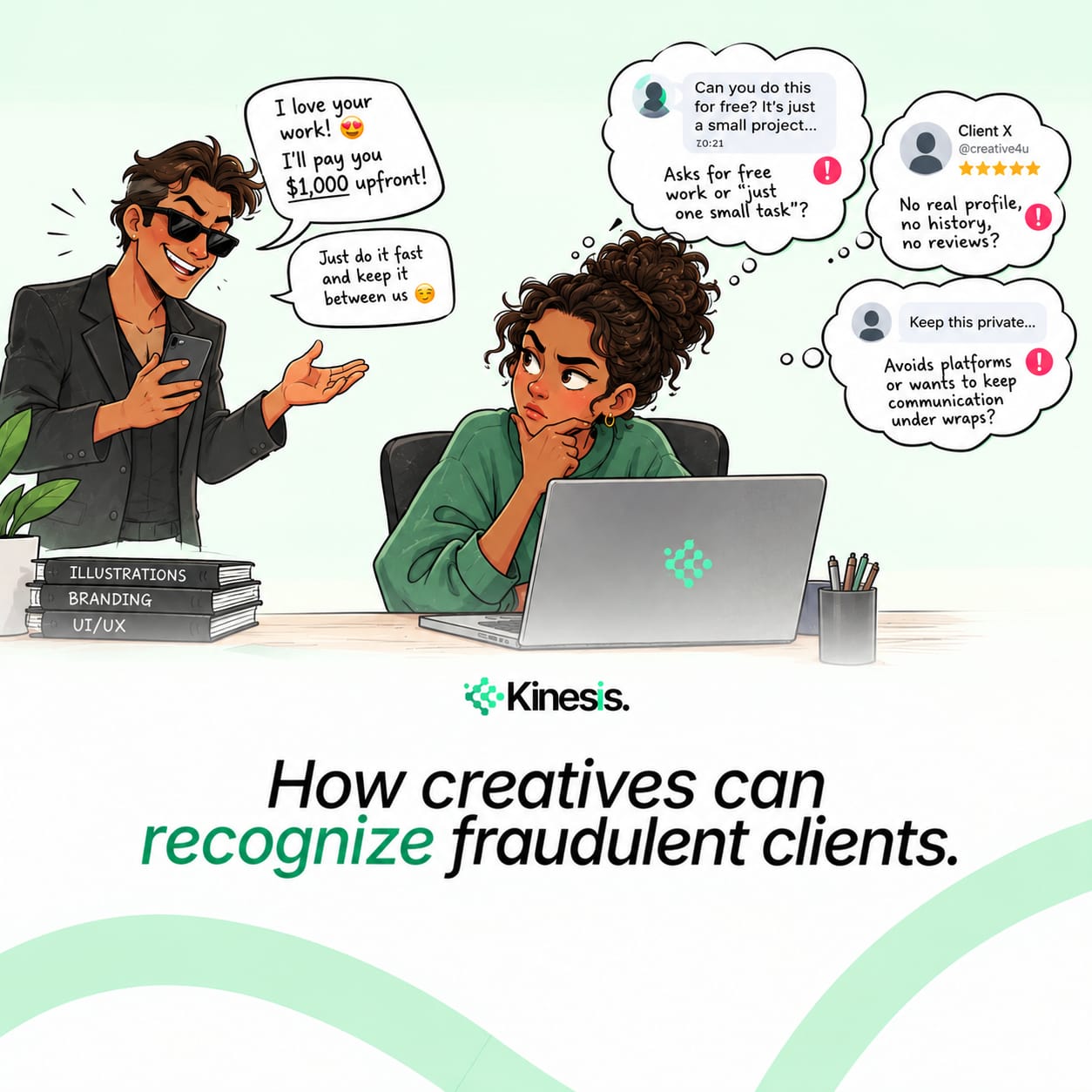
Not Every Client Who Loves Your Work Is a Genuine Client
A client contacts you about your work. They praise your portfolio, promise a good budget, and want you to start immediately. Everything seems promising until they send a suspicious payment receipt, ask you to refund an alleged overpayment, or request your files before payment is confirmed.
What looked like a good business opportunity can quickly turn into a costly mistake.
For freelance creatives, finding new clients is an important part of growing a business. But not every enquiry is genuine. Some people take advantage of creatives who are eager to secure projects, earn money, and build their portfolios.
The good news is that many fraudulent clients display warning signs before a deal goes wrong. Knowing what to look for can help you make better decisions and protect your business.
Here are five warning signs every creative should know
1. They Pressure You to Start Immediately
A client may claim that a project is urgent and insist that you begin work immediately. They might promise to send payment later or assure you that everything is already arranged.
While genuine projects can have tight deadlines, pressure should not prevent you from following your normal business process.
Be cautious when a client refuses to discuss the project properly, avoids agreeing on payment terms, or insists that you begin work before confirming important details. Some fraudulent clients use urgency to stop you from asking questions or noticing inconsistencies.
A tight deadline does not automatically mean a client is dishonest. However, when urgency comes with vague agreements, unconfirmed payments, or resistance to reasonable questions, it is worth taking a closer look.
2. Their Payment Arrangements Seem Suspicious
Payment-related scams can take different forms. A client might claim to have overpaid you and ask you to refund the difference. Another might ask you to receive money on behalf of someone else or use an unusual payment arrangement that you cannot properly verify.
For example, a client agrees to pay ₦150,000 for a video project but claims to have mistakenly transferred ₦200,000. They ask you to return ₦50,000 immediately.
If the original payment is fraudulent, reversed, or never actually completed, you could lose the money you sent back.
In some cases, a client may also ask you to pay an unexpected processing fee or transfer money to a third party before receiving your payment. These requests can be warning signs, particularly when the explanation is unclear or the client insists on immediate action.
Legitimate payment arrangements should be transparent and verifiable. If the process seems unnecessarily complicated or requires you to send money before you can receive payment for your work, proceed with caution.
3. They Send Fake Payment Alerts or Receipts
A payment screenshot can look convincing without proving that money has entered your account. Fraudulent clients may send edited receipts, fake bank alerts, or emails designed to look like official payment confirmations.
They may then pressure you to deliver the finished design, video, photographs, or other work because they claim payment has already been made.
The problem is simple: a payment claim is not the same as a confirmed payment.
Even an email or notification that appears official may not be reliable proof that a transaction has been completed. Some scammers rely on the fact that creatives are busy and may release their work without checking their accounts.
Always distinguish between a client saying they have paid and a payment you can independently verify. Until the funds are confirmed through your bank or payment provider, the transaction should not be treated as completed.
4. They Request Sensitive Information or Files Too Early
A client may need certain information to process a legitimate business transaction. However, you should be cautious when someone requests passwords, verification codes, banking credentials, identity documents without a clear reason, or access to your personal accounts.
These requests can expose you to account theft, identity fraud, or unauthorized transactions. No legitimate project should require you to disclose your passwords or one-time verification codes.
The same caution applies to your creative work. A client who demands editable project files, high-resolution images, or complete deliverables before the agreed payment stage may be putting your work at risk.
Not every request for source files is fraudulent. Some projects legitimately require editable files as part of the final delivery. The concern is whether the request matches the agreed scope, payment terms, and stage of the project.
Pay attention to what a client requests, why they need it, and whether the timing makes sense.
5. Their Story Keeps Changing
A client's details may become inconsistent as the conversation progresses. They might change the project requirements repeatedly, provide conflicting information about the company they represent, avoid answering reasonable questions, or use different names and payment details without a clear explanation.
For example, a client may initially claim to represent a company but later provide a different company name when discussing payment. They might also change the agreed budget, give conflicting explanations about the project, or introduce new conditions after you have already started working.
One inconsistency does not automatically prove fraud. People make mistakes, and project requirements can change for legitimate reasons. However, repeated contradictions combined with pressure, suspicious payments, or requests for sensitive information should not be ignored.
When the details of a project keep changing and the client cannot provide reasonable explanations, it becomes harder to establish trust and protect your interests.
What Should You Do If You Suspect a Fraudulent Client?
Recognizing the warning signs is only the first step. Your response can determine whether a suspicious interaction becomes a serious problem.
Here are practical steps you can take to protect yourself:
- 1. Pause the project: Do not rush into work, release files, or make payments while you
- investigate.
- 2. Verify the client: Check their business information, professional profiles, website, and other available evidence. Remember that online profiles and websites can also be fabricated.
- 3. Keep records: Save messages, payment claims, receipts, contracts, and other relevant communication in case you need to report the incident.
- Protect your work: Agree on when previews, drafts, source files, and final deliverables will be provided. Avoid releasing final files before the agreed conditions have been met.
- 4. Verify every payment: Check your account or payment provider directly. Do not rely solely on screenshots, emails, or messages from the client.
- 5. Protect your personal information: Never share passwords, banking credentials, or one-time verification codes. Be cautious about providing sensitive documents without a legitimate, verified reason.
- 6. Walk away when necessary: You do not have to accept a project simply because you need the income. If the client repeatedly raises concerns and refuses to address them, declining the project may be the safest decision.
If you have already lost money or shared sensitive information, contact your bank or payment provider immediately, secure any affected accounts, and report the incident to the appropriate authorities.
How KinesisFlow Can Help You Stay Organized
Managing several clients through WhatsApp can become difficult, especially when project details, payment discussions, and important agreements are scattered across conversations.
KinesisFlow helps creatives manage client relationships through WhatsApp, making it easier to keep client interactions and business information organized. Its portfolio features also help creatives present their work to potential clients, while Kinexa, its AI personal assistant, supports their workflow.
Having organized client information can help you keep track of conversations, review agreed terms, and notice inconsistencies more easily.
However, no client management platform can guarantee that every client is genuine. You should still verify payments, protect sensitive information, and establish clear agreements before starting a project.
Stay Alert, Protect Your Creative Business
Dealing with fraudulent clients can cost you more than money. It can waste your time, put your work at risk, and make it harder to trust future business opportunities. That is why knowing the warning signs matters.
Before accepting a project, take time to verify the client, confirm payment arrangements, and agree on the terms of your work. If something does not add up, ask questions before moving forward. A legitimate client should have no problem with reasonable steps to protect your business.
As your creative business grows, keeping client conversations, project details, and agreements organized can also help you stay on top of your work. KinesisFlow helps creatives manage client relationships through WhatsApp, giving them a more structured way to handle their daily interactions.
Ultimately, protecting your creative business starts with being careful about who you work with and the terms you agree to. A good client relationship should begin with clarity, trust, and transparency, not pressure or uncertainty.